Scheduled Commercial Cleaning in Dublin
Contract cleaning for shops, gyms, clinics, schools, warehouses and apartment-block common areas, priced by the hour or after a site survey.
- From €30
- All County Dublin
- Own products
- Insured team
Dublin Cleaners is a contract and commercial cleaner covering County Dublin, Bray, Maynooth and Naas from Citywest Business Campus. Our commercial cleaning in Dublin covers premises that are not offices: retail units, gyms, clinics, schools, warehouses and the shared halls of apartment blocks. Contracts are priced after a site survey, and the scope, frequency and price are worth agreeing in writing before the first visit. Last updated: 14 November 2026.
Commercial Cleaning prices in Dublin
Hourly rates, two-hour minimum visit. Final prices: no VAT is added on top.
from €30
| Commercial cleaning, per hour | from €30 |
|---|---|
| Minimum visit | 2 hours |
| Contract cleaning, weekly or daily | quoted after site survey |
| One-off or periodic deep clean | quoted after site survey |
Add-ons
- Carpet cleaning, per roomfrom €55
- Three carpeted roomsfrom €145
- Reception sofa, 3-seatfrom €95
- Reception sofa, 2-seatfrom €75
Cleaning services carry the reduced VAT rate of 13.5% in Ireland, and our prices already include any VAT due.
What changes the price
- Floor area and floor type: vinyl, rubber gym flooring, carpet tiles and sealed concrete all take different times.
- Frequency: a daily contract spreads the work, while a monthly visit has more build-up to clear each time.
- Access hours: the cleaning slot has to fit around your trading hours, deliveries and alarm times.
- Sector tasks: clinic rooms, changing areas and bin stores add time beyond general dusting and floors.
What is included
- Floors vacuumed, mopped or scrubbed by type
- Touchpoints disinfected: handles, switches, rails, lift buttons
- Toilets, washrooms and changing rooms cleaned
- Staff kitchens, sinks and appliance fronts wiped
- Bins emptied, liners replaced, bin stores swept
- High and low dusting, ledges and skirting
- Internal glass, entrance doors and partitions
- Stairwells, corridors and handrails
Not included
- Exterior and high-level glazing that needs access equipment
- Roof, racking or ceiling cleaning above safe ladder height
- Biohazard, crime-scene or flood clean-up
- Supplying toilet roll, soap or bin liners
- Repairs, painting or pest control
What commercial cleaning covers, sector by sector
Commercial cleaning covers any business premises that is not a standard office: shops, gyms, clinics, schools and the shared parts of apartment blocks. The core tasks are the same everywhere, floors, touchpoints, washrooms and bins, but each sector adds its own list on top.
The task lists below are a starting point, and a site survey adjusts them to your floor types and footfall. Desk-based workplaces are covered on our office cleaning page instead.
- Shop floor vacuumed and mopped
- Entrance mats lifted and cleaned under
- Machine grips, seats and screens
- Free weights and benches wiped
- Waiting-room chairs and door plates
- Treatment couch frames and trolleys
- Classroom floors and desks
- Toilets cleaned and checked daily
- Lobby floors and entrance glass
- Stairwells swept and mopped
Retail units and shopfronts
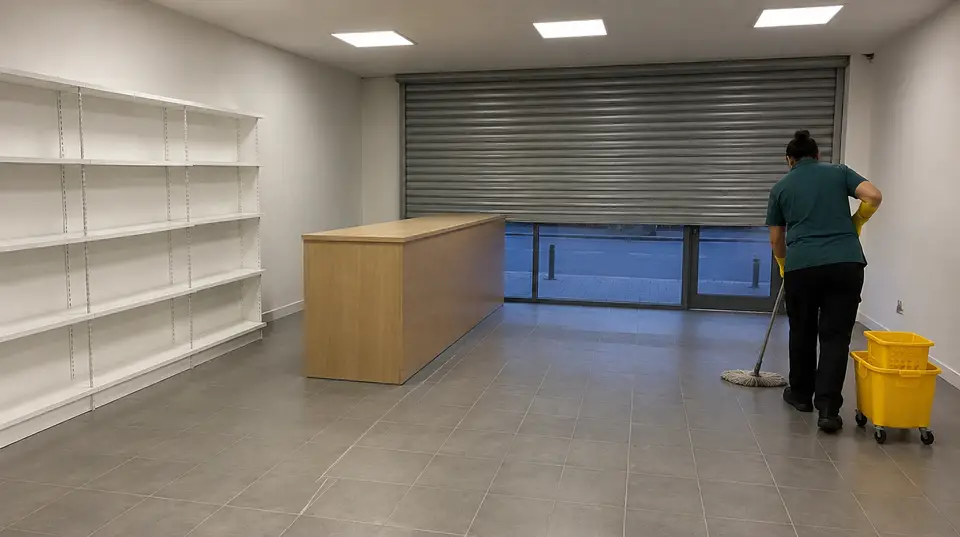
A shop is judged from the doorway, so the entrance gets the most attention. Mats are lifted, the floor beneath is mopped, and fingerprints come off the door glass and display fronts. Counters, card terminals and basket handles are disinfected because every customer touches them.
Behind the scenes, the stockroom floor is swept and the staff toilet and kitchenette are cleaned. Fitting rooms get mirrors polished and floors vacuumed, as hangers and tags collect in the corners.
Gyms and fitness studios
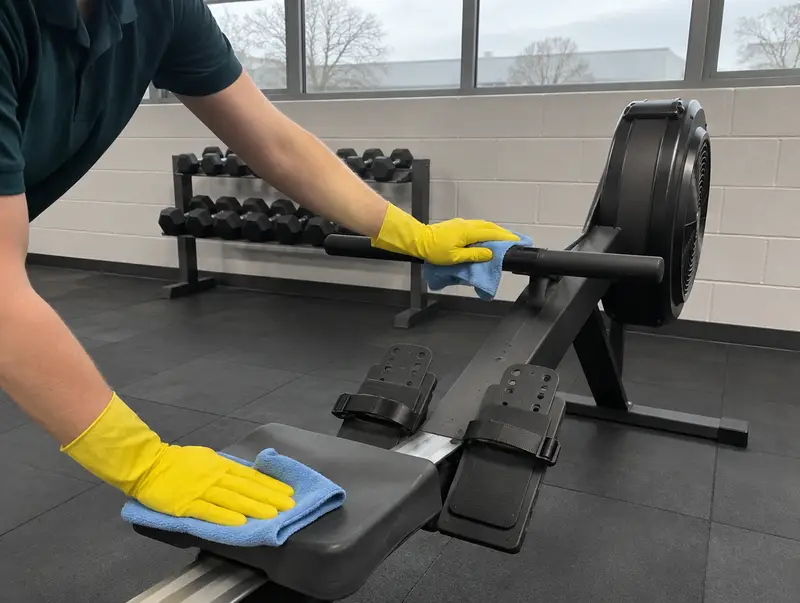
Gyms carry sweat, chalk and skin contact on every surface. Grips, seats, benches and the screens on cardio machines are wiped with a disinfectant that suits the equipment finish. Rubber flooring is vacuumed first, then mopped with a neutral cleaner so it does not turn slippery.
Changing rooms take the longest. Showers are descaled, drains are cleared of hair, and benches and lockers are wiped. Studio floors can be mopped between class blocks if the timetable allows.
Clinics, surgeries and treatment rooms
Clinics, dental surgeries, physio rooms and beauty clinics need a strict order of work. The usual order is treatment rooms first and toilets last, so dirt is never carried into a clinical space. Ask any contractor how washroom cloths are kept out of treatment rooms, and put the answer in the scope.
Couch frames, trolleys, sinks and dispensers are wiped on every visit. Clinical waste and sharps bins are not part of a cleaning scope and stay for your licensed waste contractor. Your infection-control lead should sign off the task list.
Schools and childcare buildings
Schools are cleaned after pupils leave in the afternoon, and the bigger jobs are moved into term breaks. Desks, door handles, stair rails and toilets are done every visit because they spread colds fastest. Corridors and stairs follow.
The term-time routine keeps the building ticking over. The summer clean is when floors are scrubbed, high ledges are dusted and every cupboard is emptied and wiped. Contractor vetting rules are set by the school's board, so raise them before any contractor quotes.
Apartment-block communal areas
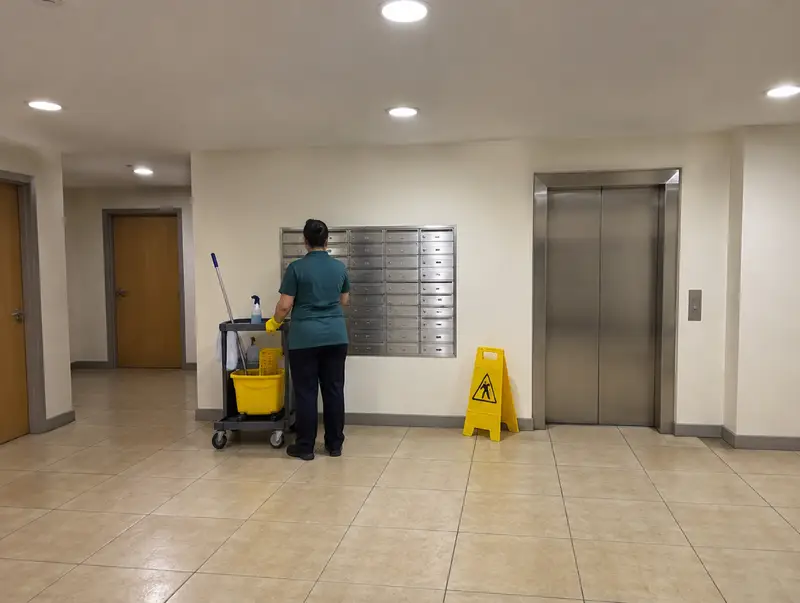
Apartment blocks in Dublin are run by an owners' management company, often through a managing agent. Residents notice the lobby, the lift and the bin store first, so put those three on every visit in the scope. Stairwells and corridors are swept, mopped or vacuumed floor by floor.
The scope is agreed with the management company or its agent, and the invoice can go to either. It lists which floors are done each week, so a twelve-storey block can be split across two visits.
Industrial and warehouse cleaning
Industrial cleaning and warehouse cleaning focus on floors, welfare areas and dust at reachable height. Cleaning happens around live operations, so agree in writing which aisles are closed, when forklifts stop and which zones are off limits. High-level racking and roof work need access equipment and sit outside our scope.
Warehouses and loading bays
- Aisles swept and scrubbed in sections
- Loading bay floors and dock edges
- Low racking shelves dusted
- Canteen and toilets cleaned
- Pallet debris and shrink-wrap cleared
Warehouse floors collect grit, pallet splinters and tyre marks. Aisles are cleaned in sections agreed with your site manager, so goods can keep moving in the rest of the building. Loading bays are swept and scrubbed, as wet leaves and road dirt come in on every delivery.
The welfare side matters as much as the floor. Canteens, toilets and locker rooms are cleaned to the same standard as an office, because shift workers use them around the clock.
Industrial units and workshops
- Workshop floors degreased
- Office and welfare block cleaned
- Machine exteriors wiped when isolated
- Dust at reachable height removed
- Waste segregated as your site rules say
Industrial units in places like Ballymount, Citywest and Grange Castle often mix a workshop with an office block. Workshop floors are degreased and scrubbed. Machine casings are only wiped once your staff have isolated them, under your own permit and lock-off rules.
Your site risk assessment tells us where we can and cannot go. Anything that needs a lift, harness or confined-space entry is outside our scope.
How contract cleaning works
Contract cleaning is a recurring clean on a fixed schedule, daily, weekly or fortnightly, against a written scope. It starts with a site survey of the premises. A task list by area should follow, with an hourly or monthly price.
The scope lists every area and how often each task is done. Daily tasks might be bins, toilets and touchpoints, with floors scrubbed weekly and high dusting monthly. You can check each visit against it, which turns "it doesn't look clean" into a specific missed item we can fix.
Before the first visit, decide who holds keys or fobs and how alarm codes will be shared, and write it down. Agree whether toilet roll, soap and bin liners come from your own stock. Ask for the term and the way either side can end the arrangement to be stated in writing too.
We do not sell a satisfaction guarantee. The written task list is what both sides check the work against, so ask for a review point, such as after the first month, in case the hours turn out wrong.
One-off and periodic deep cleans
A one-off commercial deep clean resets a premises before a contract starts, after a fit-out, or once or twice a year on top of the routine. It reaches the jobs a daily clean skips: scrubbed floors, high ledges, inside cupboards, behind fixtures and carpets cleaned by hot water extraction.
Many contracts start with a deep clean, because the first routine visit cannot clear months of build-up. Periodic cleans are often timed for quiet weeks, such as the Christmas break for a clinic or August for a school.
After a shop fit-out or a refurbishment, the dust from cutting and sanding settles on every surface. That job follows our after builders cleaning method, with HEPA vacuums and damp wiping, before stock goes back on the shelves. Carpet tiles and reception seating can be cleaned on the same visit as add-ons.
Chemicals, safety data and site rules
The Health and Safety Authority says each place of work needs a risk assessment before cleaning starts. It also says Safety Data Sheets should be available for every hazardous chemical used. Ask any contractor for the data sheets of the products it brings, and share your own site risk assessment before the first visit.
HSA guidance on contract cleaning warns that bleach must not come into contact with ammonia, toilet cleaners or drain cleaners, as a harmful gas can form. Products should never be mixed, decanted into unlabelled bottles or left where customers can reach them.
Neutral, low-fragrance cleaners do most jobs, with disinfectant kept for touchpoints, washrooms and clinic surfaces. Any floor the public walks on needs a wet-floor sign while it is being mopped. Dublin Cleaners carries public liability insurance for work on your premises, and our team brings its own products and equipment.
Why contract cleaning costs what it does
An Employment Regulation Order sets the legal pay floor for contract cleaners in Ireland, and in 2026 it sits above the general minimum wage. According to SIPTU, the contract cleaning ERO rate rose to €14.80 an hour from 1 January 2026, before employer PRSI, holiday pay, insurance and products.
€14.80
contract cleaning ERO minimum per hour from 1 January 2026
SIPTU
13.5%
reduced VAT rate for cleaning services
Revenue
€30
our hourly rate, VAT included
Dublin Cleaners price list
That floor explains most of the gap between a cash cleaner and a company invoice. A company rate also has to cover employer PRSI, holiday pay, insurance, products and travel. Our €30 an hour is about twice the €14.80 ERO rate, worked out from our price list and the SIPTU figure.
A quote far below the ERO floor usually means something is missing, such as insurance or proper pay. The contract cleaning pay rates for 2026 set out the wage side in more detail. Cleaning carries the reduced 13.5% VAT rate, according to Revenue, and our prices already include it.
How the options compare
| Doing it yourself | Cash cleaner | Dublin Cleaners | |
|---|---|---|---|
| Site survey for contracts | Not applicable | Rarely | Before the price |
| Products and equipment | You buy them | Often yours | We bring them |
| Public liability insurance | Your own policy | Often none | Insured |
| Hourly rate published | Not applicable | Agreed in cash | From €30 |
| HEPA vacuums | Household vacuum | Varies | Yes |
| Price agreed in writing | Your time | Cash per visit | Hourly or monthly rate |
Book a commercial cleaning survey
Tell us the type of premises, the floor area and how often you want it cleaned. We arrange a site survey and confirm the price before the first visit.
Commercial Cleaning: questions
How much does commercial cleaning cost in Dublin?
Commercial cleaning with Dublin Cleaners starts from €30 an hour, with a two-hour minimum visit. Contract cleaning is priced after a site survey, so the monthly figure reflects your floor area, floor types and frequency. Prices already include any VAT due. A gym with changing rooms takes longer than a shop of the same size.
Do you clean apartment-block common areas for management companies?
Yes. We clean lobbies, stairwells, corridors, lift cars, post-box areas and bin stores for owners' management companies and their managing agents. Agree in writing which floors get done each visit, and whether the invoice goes to the company or agent. Car parks and exterior glazing are quoted separately.
Can you clean outside business hours?
Our office is open Monday to Friday 09:00-18:00 and Saturday 09:00-14:00. The cleaning slot itself is agreed at the site survey around your trading hours, alarm times and deliveries. Shops and clinics often prefer a quiet part of the day, so tell us when footfall is lowest and we plan the visit around it.
Is there a minimum contract length?
Term, frequency and price are agreed in writing before the first visit. Ask for all three in the scope, along with how either side can end it. Many sites start with a one-off deep clean. They then move to a weekly or daily routine once the build-up is cleared.
How do I book?
Call 01 230 8646 or send the quote form with the service and your area. We reply with a price, usually by phone, and confirm the day and access arrangements before the team arrives.
Related services
Daily, weekly or out-of-hours office cleaning: desks, kitchens, washrooms and floors on a schedule that suits you.
From €30 / hourBuilders dust, plaster and paint splashes removed with HEPA vacuums after an extension, renovation or new build.
From €190 / 1-bed apartmentInside and outside glass, frames and sills for houses, apartments and shopfronts.
From €60 / 2 to 3 bed house, outside